• Las Cruces, NM
  • M-F: 8:00am - 5:00pm
Call Us Today (575) 635-8883
Schedule an Estimate
Stop the Soggy Spots for Good.
French Drain Installation in Las Cruces, NM

French drains move standing water away from your lawn, foundation, and walkways before it can cause damage. We design and install perforated-pipe drainage systems across Las Cruces and the Mesilla Valley, tuned for caliche subsoil and monsoon storms. 19 years in business. 500+ projects installed. Lifetime workmanship warranty.

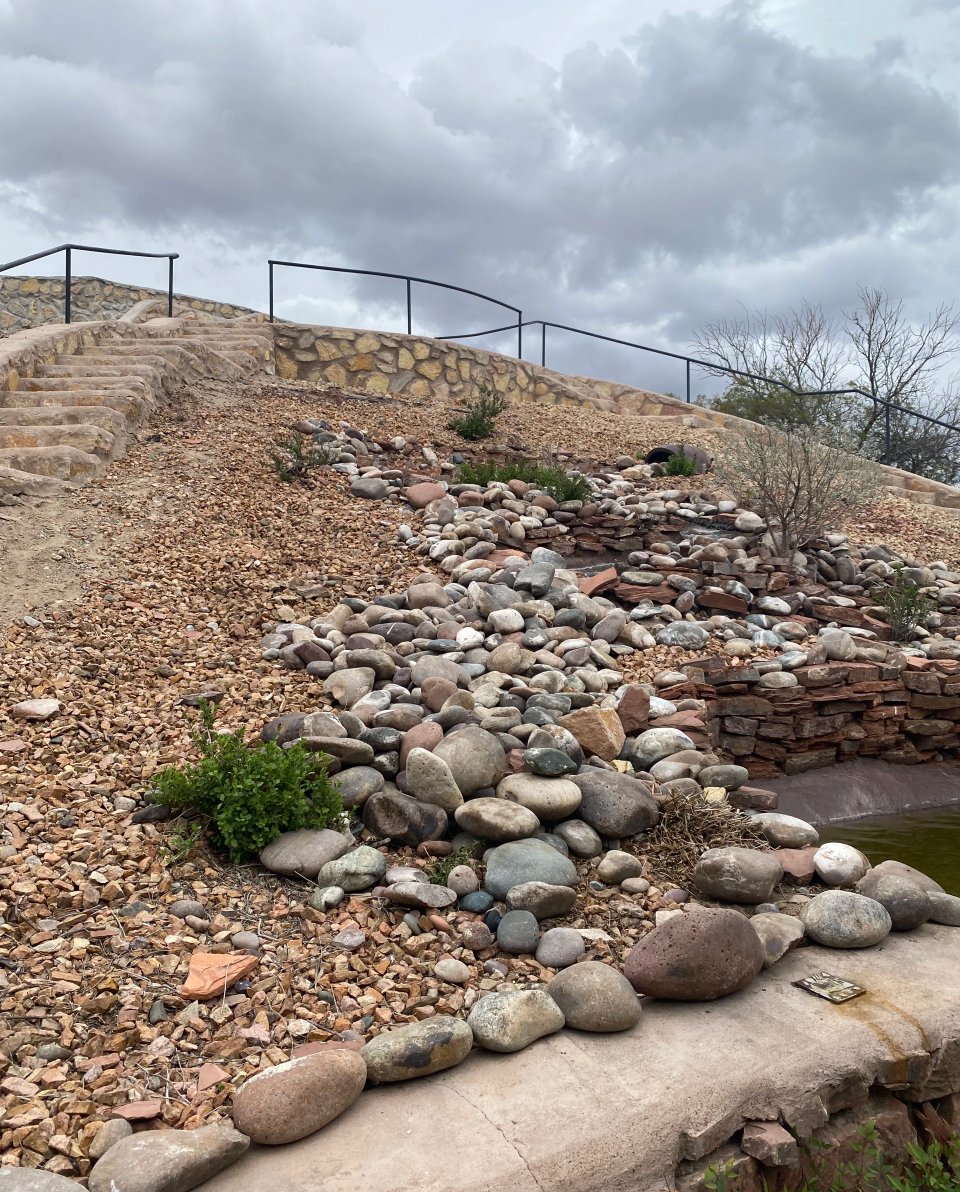
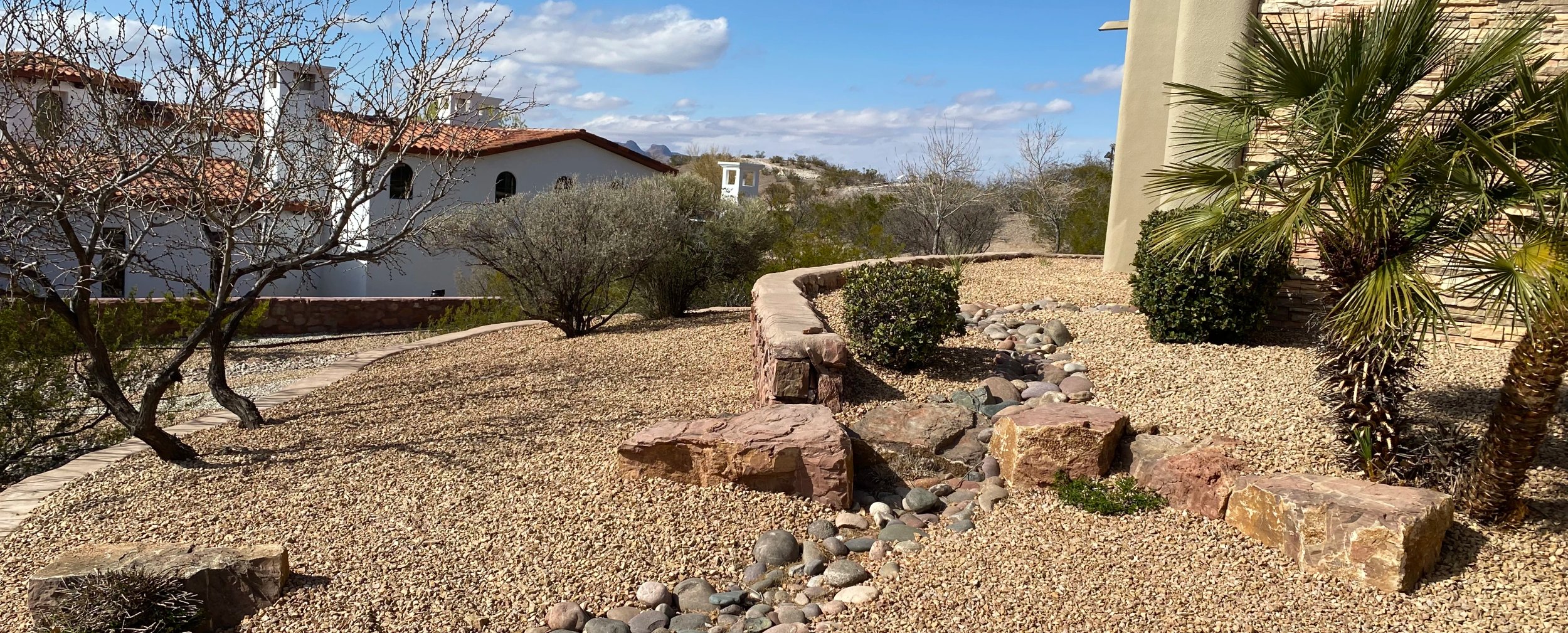
Rock-lined French drain channel carrying water off a sloped Las Cruces yard, installed by Brainard's Greenscapes
What Is a French Drain?

A Gravel Trench That Pulls Water Out of the Ground

A French drain is a gravel-filled trench with a perforated pipe at the bottom and filter fabric wrapped around the whole thing. Water from a soggy lawn or a wet foundation enters the gravel, drops into the pipe, and flows downhill to a safe discharge point. In Las Cruces, where a layer of caliche or compacted clay sits a foot or two below most yards, water that should percolate has nowhere to go. A French drain gives it that path.

  • Perforated pipe (3, 4, or 6 inch) sized to the watershed feeding it.
  • Clean washed gravel, never crusher fines that pack and clog.
  • Non-woven filter fabric wrapped around the gravel as a full burrito.
  • Daylight discharge or catch basin, set by site slope.
  • Designed for caliche, clay, and former arroyo lots typical to the Mesilla Valley.
  • Yard French Drains

    Soggy lawn spots, low areas that hold water for days, and dieback from oversaturation. Trench depth tuned to the soil layer trapping the water.

  • Foundation Drains

    A French drain around the foundation, set just below the footing, intercepts water before it ever reaches the wall, garage slab, or window well.

  • Downspout Tie-Ins

    Solid pipe carries roof runoff away from the house first, then a perforated French drain handles the residual subsurface water on the same trench.

  • Hardscape Drainage

    A French drain behind a retaining wall or under a paver patio relieves hydrostatic pressure and keeps the hardscape from heaving, cracking, or shifting.

How We Work

Our 5-Step French Drain Installation Process

  • Free Drainage Assessment

    We walk the property, locate the water source, trace the flow path, identify a discharge point, and check soil percolation. Free, usually within a week.

  • Custom Drain Design

    We spec linear feet, depth, pipe diameter, and discharge type (daylight vs catch basin vs solid extension). You approve the plan and the written quote before we dig.

  • Trenching & Excavation

    Our in-house crew cuts a narrow, straight trench at the right depth, checks the fall with a transit, and keeps spoil on tarps to protect the surrounding lawn.

  • Pipe & Gravel Install

    Filter fabric down first, gravel base, perforated pipe, gravel cover, then the fabric wraps over the top as a burrito. Topsoil and sod or DG go back last.

  • Flow Test & Walkthrough

    We run a hose at the inlet, watch flow at the discharge, walk the line with you, and hand off a written warranty before we leave the site.

Signs You Need a Drain

Why Las Cruces Yards Call for a French Drain

Most calls we get start with one of these. A French drain fixes the cause once instead of bandaging the symptom every summer.

  • Soggy Lawn Spots That Never Dry

    A patch stays mushy for days after the sprinklers run or a rain passes. The caliche underneath is holding the water at root level and a French drain pulls it out before the grass dies back.

  • Water Pooling Against the Foundation

    Water against the foundation after a storm shows up as wet stucco, efflorescence on block, or a damp garage slab. A foundation French drain set below the footing intercepts it before the wall does.

  • Standing Water in the Yard After Rain

    Standing water in the yard 24 hours after a monsoon storm means the subsoil cannot percolate. We grade the trench from the puddle to a daylight discharge so the same storm next week drains in minutes.

  • Water in the Garage, Crawl Space, or Window Well

    Water finding its way into a garage or window well is a foundation-side drainage problem. An exterior French drain plus a downspout tie-in cuts off the flow before it ever touches the wall.

  • Cracked or Shifting Concrete

    A patio, walkway, or driveway slab that has cracked or settled often sits over saturated subsoil. A French drain along the high side relieves the pressure that is heaving and shrinking the soil under the slab.

  • HOA Drainage Notice or Neighbor Runoff

    Sonoma Ranch, Picacho Hills, and most Las Cruces HOAs require runoff to stay on the property. A French drain captures uphill runoff and discharges it where the rules allow, on your timeline.

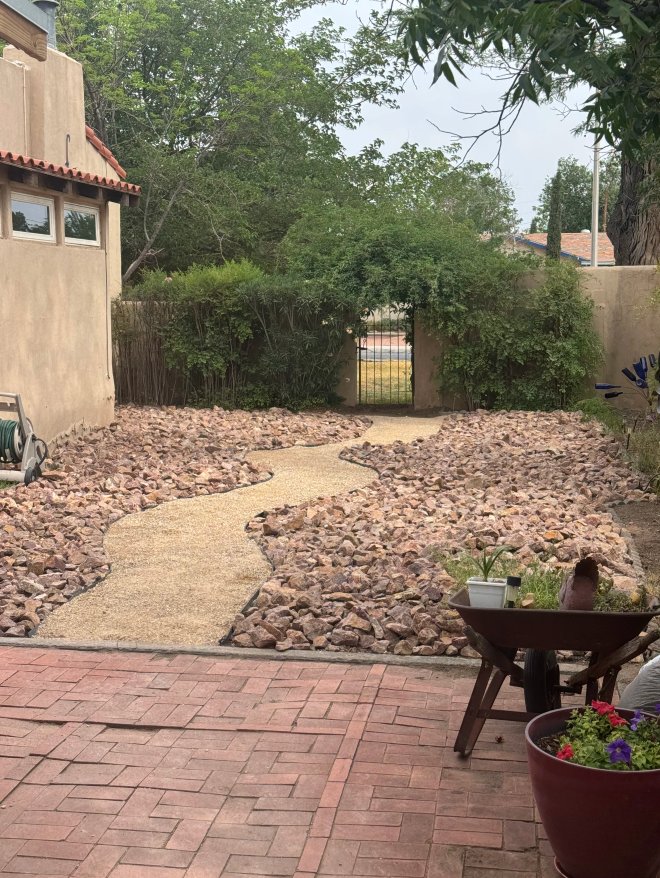
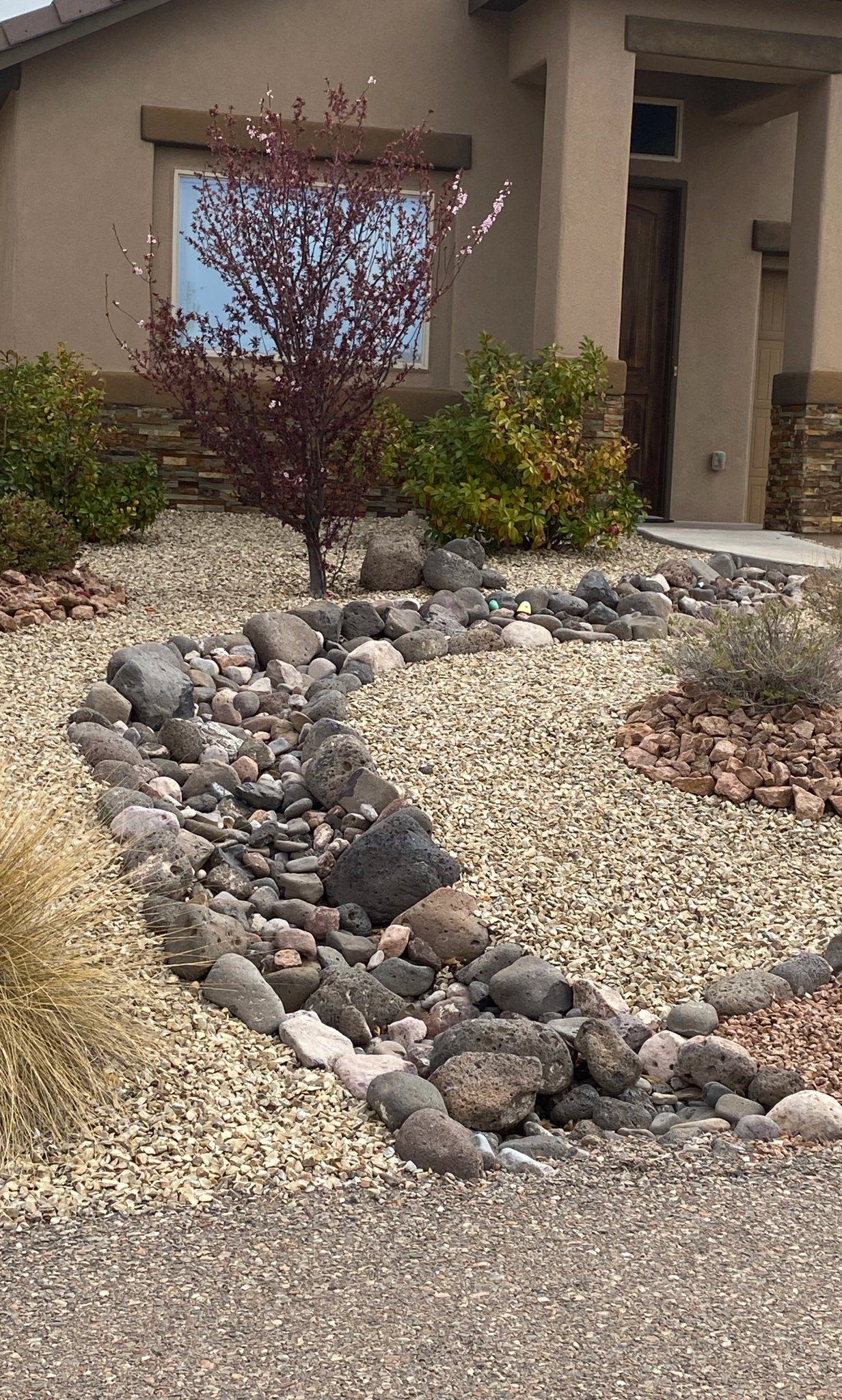
Front-yard French drain disguised as a dry creek bed, preventing standing water at a Las Cruces home by Brainard's Greenscapes
Where They Fit

French Drain Solutions for Every Part of a Las Cruces Property

A French drain is not one product. It is a category of buried drainage we shape to the site. Here is how we typically lay one out across a Mesilla Valley property.

Yard drainage: 18 to 24 inches deep with a 3 or 4 inch perforated pipe, run from the soggy spot to a daylight outlet at a low corner of the lot. The most common install we do.

Foundation French drain: 24 to 48 inches deep, set just below the footing on the uphill side of the house. Wrapped in fabric and tied into a solid-pipe extension that carries water past the corner of the home.

Retaining wall drainage: a perforated pipe behind the wall in clean rock relieves hydrostatic pressure. Skipping this is the most common reason walls bow and crack within five years.

Downspout tie-ins: solid PVC from each downspout carries roof water to a French drain or pop-up emitter 10 feet or more from the foundation. The single highest-impact fix on most foundation calls.

Driveway and patio edge drains: a narrow French drain along the high side of a slab catches runoff before it sheets across the concrete and undermines the base.

Uphill cutoff drains: for lots on a slope or downhill from a neighbor, a cutoff trench intercepts runoff at the property line and routes it around the house entirely.

Plan Your Drain Layout
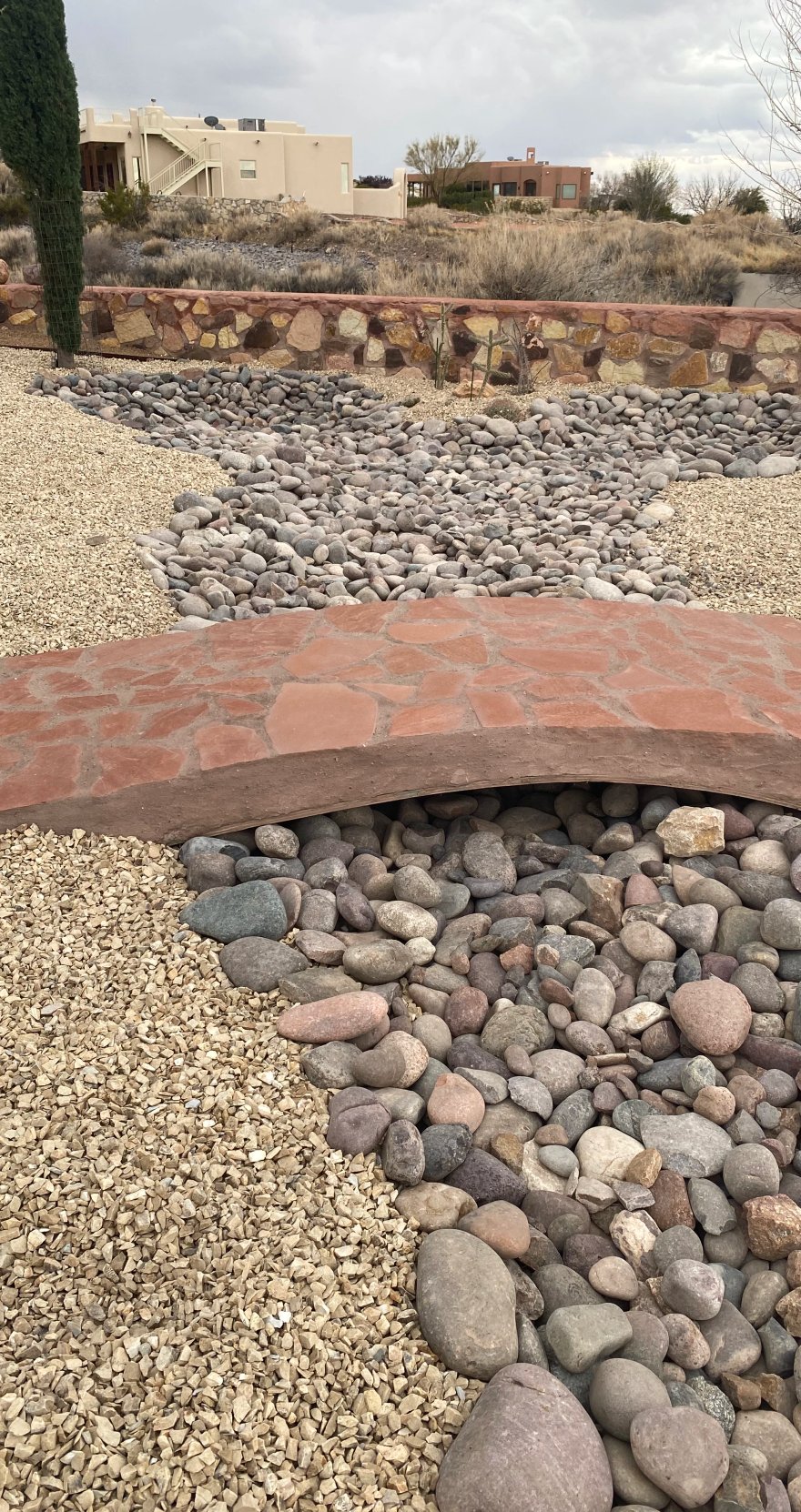
Decorative French drain dry creek bed with flagstone crossing installed by Brainard's Greenscapes in Las Cruces, NM
Why Choose Us

Why Las Cruces Trusts Brainard’s with Drainage Work

A French drain is only as good as the fabric, the gravel, and the slope behind it. Skip any one of those and the trench silts up by year three. We spec real materials, dig to the right depth, wrap a full fabric burrito, and stand behind the install for as long as you own the home.

  • Built for Caliche & Clay

    Las Cruces soils do not percolate. Every drain gets sized for the watershed feeding it, with the trench cut past the caliche layer that is trapping the water.

  • Full Fabric Burrito

    Non-woven geotextile fabric wraps the entire gravel column, not just the pipe sock. That single detail is why our drains do not silt closed in year three.

  • In-House Crews

    Same company designs, trenches, installs, and guarantees the system. No subcontractors. Same number to call if anything changes after the next monsoon.

  • Lifetime Workmanship Warranty

    Trench, pipe, fabric, and discharge backed for as long as you own the home. Plus full manufacturer warranties on pipe, fabric, and catch basin components.

Get a Free Assessment
Manufacturer-Certified Installer

NDS Pro Certified Drainage Contractor

Brainard’s Greenscapes is an NDS Pro Certified contractor, trained directly by NDS (National Diversified Sales) — the largest drainage product manufacturer in the United States and the maker of the EZflow French-drain systems, Flo-Well dry wells, Spee-D channel drains, and pop-up emitters used on most of our drainage installs.

What that means for you:
  • Full manufacturer warranty coverage on every NDS component we install, because the install meets NDS’s engineering specs.
  • Trained directly by NDS on sizing, depth, fabric placement, and discharge for residential French drains.
  • Up-to-date on the latest drainage products and best practices the way NDS engineers actually design them.
  • Verifiable on the official NDS Pro contractor program — an independent, third-party trust signal.

Learn About NDS Pro Certification

French Drain Cost in Las Cruces

Typical Range $750–$12,000

French drain cost depends on linear feet, depth, pipe diameter, and the discharge point. Most installs in Las Cruces land between $25 and $60 per foot. A short yard drain of 20 to 30 feet runs $750 to $2,000. A foundation perimeter drain at 50 to 100 feet runs $2,500 to $6,000. Complex projects with multiple lines, deep trenching, or a sump pit can run $6,000 to $12,000 or more.

  • Free on-site assessment, always.
  • Itemized written quote tied to linear feet. No ballparks.
  • Lifetime workmanship warranty on every install.
Request a Custom Quote

The Brainard’s Difference

  • Faith-Centered

    Honest pricing, clear communication, and follow-through on every job. We do what we say.

  • Lifetime Workmanship Warranty

    Trench, pipe, and fabric guaranteed for as long as you own the home. Plus full manufacturer warranties on every component we install.

  • Locally Rooted

    In-house designers who know how Las Cruces caliche, clay, and former arroyo paths trap water under a yard, and how to route it out.

Built for the Valley

Drainage Designed for Las Cruces Soils & Monsoons

The Mesilla Valley has its own drainage problems. A French drain that works in Albuquerque or Phoenix is not necessarily the right design here. Every system we install accounts for these conditions.

  • Caliche subsoil: a cemented calcium-carbonate layer sits 12 to 36 inches under most lots and stops water from percolating. Trenches must be cut through or routed past it.
  • Clay pockets: properties near the river and along old farm parcels can have clay layers that hold water for weeks. Pipe diameter and gravel volume get sized up.
  • Monsoon storms: July through September brings short, heavy bursts. We design discharge points to handle peak flow, not average flow, with overflow paths where needed.
  • Former arroyo paths: a lot of Las Cruces homes sit on filled arroyo channels. Water still wants to follow the original path and a cutoff drain redirects it.
  • HOA runoff rules: Sonoma Ranch, Picacho Hills, and most planned communities require runoff to stay on the parcel. We daylight discharges in compliant locations and document the route.
  • Free assessments: we walk the lot before quoting so the trench depth, slope, and pipe diameter actually match what the property needs.
FAQ

French Drain FAQs

  • What is a French drain and how does it work?

    A French drain is a gravel-filled trench with a perforated pipe at the bottom that collects subsurface water and carries it to a safe discharge point. Water from a soggy lawn or a foundation enters the trench through the gravel, drops into the pipe through the perforations, and flows downhill to daylight or a catch basin. In Las Cruces, where caliche and clay layers stop water from percolating naturally, a French drain gives that trapped water somewhere to go.

  • How much does a French drain cost in Las Cruces?

    French drain cost is usually quoted per linear foot, and most installations in Las Cruces land between $25 and $60 per foot. A short 20 to 30 foot yard drain typically runs $750 to $2,000. A foundation perimeter drain of 50 to 100 feet runs $2,500 to $6,000. Complex projects with multiple lines, deep trenching, or a sump pit can run $6,000 to $12,000 or more. Every project starts with a free on-site assessment and an itemized written quote.

  • How long does a French drain last?

    A properly installed French drain with filter fabric wrapped around clean gravel and rigid perforated pipe will typically work for 30 to 40 years. The fabric is the part that fails first, usually because it was skipped, undersized, or installed without a wrap around the gravel. Our installs use a full fabric burrito around clean washed rock and rigid pipe, which is why the workmanship is backed for as long as you own the home.

  • French drain vs sump pump: which one do I need?

    A French drain moves water by gravity, so it works any time there is somewhere downhill to send the water. A sump pump moves water mechanically when there is no gravity discharge available, like a basement floor below grade. Most Las Cruces properties have enough slope to daylight a French drain to a low corner of the yard or to the street, so a pump is not needed. We use sumps only when the site truly cannot drain by gravity.

  • French drain vs catch basin: what is the difference?

    A catch basin is a surface grate over a small box that captures water already pooling on the surface. A French drain is a buried trench that captures subsurface water before it ever puddles. They solve different problems and often get used together: a catch basin handles the visible low spot, a French drain handles the saturated subsoil around it, and both tie into the same discharge pipe.

  • How deep does a French drain need to be?

    A typical yard French drain in Las Cruces is dug 18 to 24 inches deep. A foundation drain runs deeper, usually 24 to 48 inches, set just below the footing so it intercepts water before it reaches the wall. The trench needs at least a 1% fall (about 1 inch of drop for every 10 feet of length) so water flows by gravity all the way to the discharge. Our crew checks slope with a transit on every install.

  • Can a French drain handle Las Cruces monsoon storms?

    Yes, when it is sized for the load. Mesilla Valley monsoons drop short, intense bursts of rain on soils that do not percolate well, which is exactly the problem a French drain solves. We size the pipe diameter (3 inch, 4 inch, or 6 inch), the trench width, and the discharge point to match the watershed coming into the drain. Tying roof downspouts into a solid-pipe extension on the same system handles the biggest flow first.

  • Will a French drain ruin my yard or kill my lawn?

    No. We trench narrow, keep the spoil on tarps, and restore the surface with the same sod or decomposed granite that was there before. Most lawns are walkable within a week and look fully restored within a month. The bigger effect is that the soggy patches, dieback, and standing water that drove the call in the first place actually disappear, often within the first heavy rain after install.

Ready to Stop the Standing Water?

Get a Free Assessment