• Las Cruces, NM
  • M-F: 8:00am - 5:00pm
Call Us Today (575) 635-8883
Schedule an Estimate
Built for Monsoon Storms.

Erosion Control in Las Cruces, NM

Slope stabilization, retaining walls, riprap, swales, and native planting that hold Las Cruces soil in place through every monsoon. We design and install erosion control across the Mesilla Valley. 19 years in business. 500+ projects completed. In-house crews. Lifetime workmanship warranty.

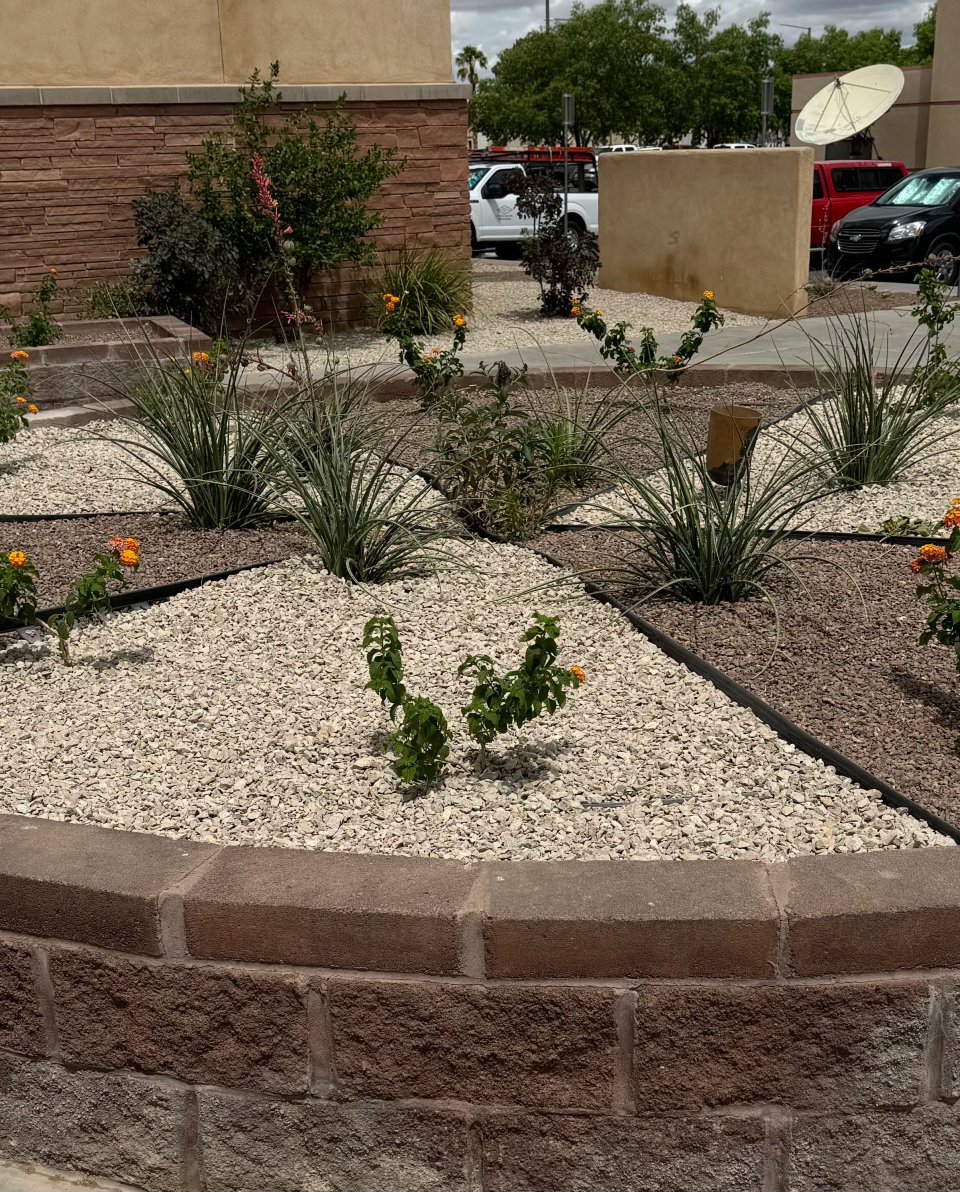
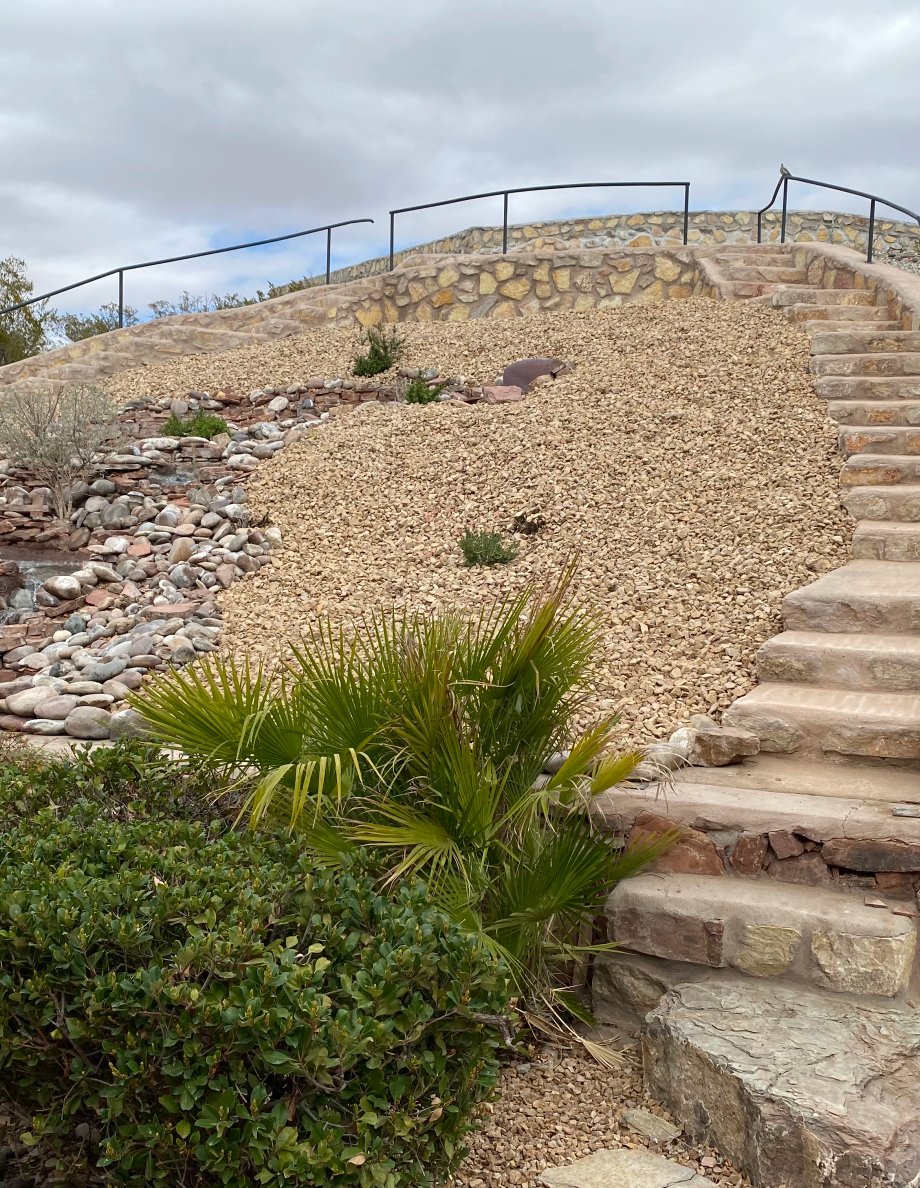
Stone border and slope stabilization by Brainard's Greenscapes in Las Cruces, NM
What Is Erosion Control?

Soil Stabilization Built for the Chihuahuan Desert

Erosion control is the work of slowing runoff and holding soil in place before the next storm washes it away. In Las Cruces, the real test is the monsoon: short, intense rain bursts that drop an inch in twenty minutes on caliche subsoil that does not absorb fast. Without armoring and vegetation, that water carves gullies, exposes roots, and floods downhill yards. Our erosion control systems combine grading, hardscape, and native planting tuned to desert hydrology.

  • Slope stabilization for hillside lots and arroyo edges.
  • Retaining walls and dry-stack stone for steep grades.
  • Riprap and rock armoring at downspouts and concentrated flow points.
  • Vegetated swales and grading to redirect runoff.
  • Deep-rooted native plants that anchor soil long-term.
  • Slope & Hillside Stabilization

    Grading, terracing, and vegetated swales for sloped lots in Picacho Hills, Las Alturas, and Sonoma Ranch. Engineered to hold through monsoon season.

  • Retaining Walls

    Segmental block, dry-stack stone, and engineered walls with proper drainage behind the face. Built to hold soil and survive the freeze cycle.

  • Riprap & Rock Armoring

    Sized rock over geotextile fabric at downspouts, drainage exits, and arroyo edges. Stops scour where water concentrates and hits the hardest.

  • Vegetation & Native Planting

    Deep-rooted natives, ground covers, and grasses chosen for desert soil. Roots anchor the slope long after the rock and fabric are buried.

How We Work

Our 5-Step Erosion Control Process

  • Free Site Assessment

    We walk the property, photograph the damage, and find where water actually enters and exits. Free, usually scheduled within a week.

  • Custom Erosion-Control Plan

    Slope analysis, drainage path mapping, material selection, and a planting palette. You get an itemized quote and a written scope before any digging starts.

  • Site Prep & Grading

    We re-shape the grade, cut swales, and prep wall footings. This is where the slope gets the geometry it needs to shed water without scouring.

  • Installation

    Retaining walls, riprap, geotextile fabric, drainage tile, and native plantings, in the right order for the slope. Our in-house crew handles every layer. No subcontractors.

  • Walkthrough & Maintenance Plan

    We walk every feature with you, hand off a written watering and maintenance plan for the new plantings, and back the workmanship for as long as you own the home.

Signs You Need It

When Las Cruces Yards Call Us for Erosion Control

Most calls come right after a monsoon storm. Catching it early, before a gully turns into structural damage, is always the cheaper fix.

  • Slope Failure After a Monsoon

    A chunk of the hillside slid, the soil pulled back from a wall, or a section of yard dropped after a heavy rain. Often paired with cracked retaining walls or settling near the foundation.

  • Soil Washing onto Driveways or Streets

    Mud, gravel, or decomposed granite ending up on the driveway, sidewalk, or street after every storm. Usually an HOA flag and a maintenance headache that gets worse each season.

  • Gullies Forming in the Yard

    Channels and ruts cut into the soil where water concentrates. They deepen with every storm until they redirect water into places it never used to go.

  • Exposed Tree Roots & Shrub Bases

    Roots that used to be buried are now in open air, and the soil around shrub crowns has stripped down to the rock layer. A clear sign topsoil is leaving the property.

  • Bare Patches Where Plants Used to Grow

    Runoff scours seed and mulch before anything can establish. Without erosion control, those bare spots get bigger every monsoon season.

  • Arroyo Edge Cutting Toward the House

    The bank of a nearby arroyo or wash is moving closer year by year. This one is urgent: once an arroyo undermines a footing it is a structural problem, not a landscape problem.

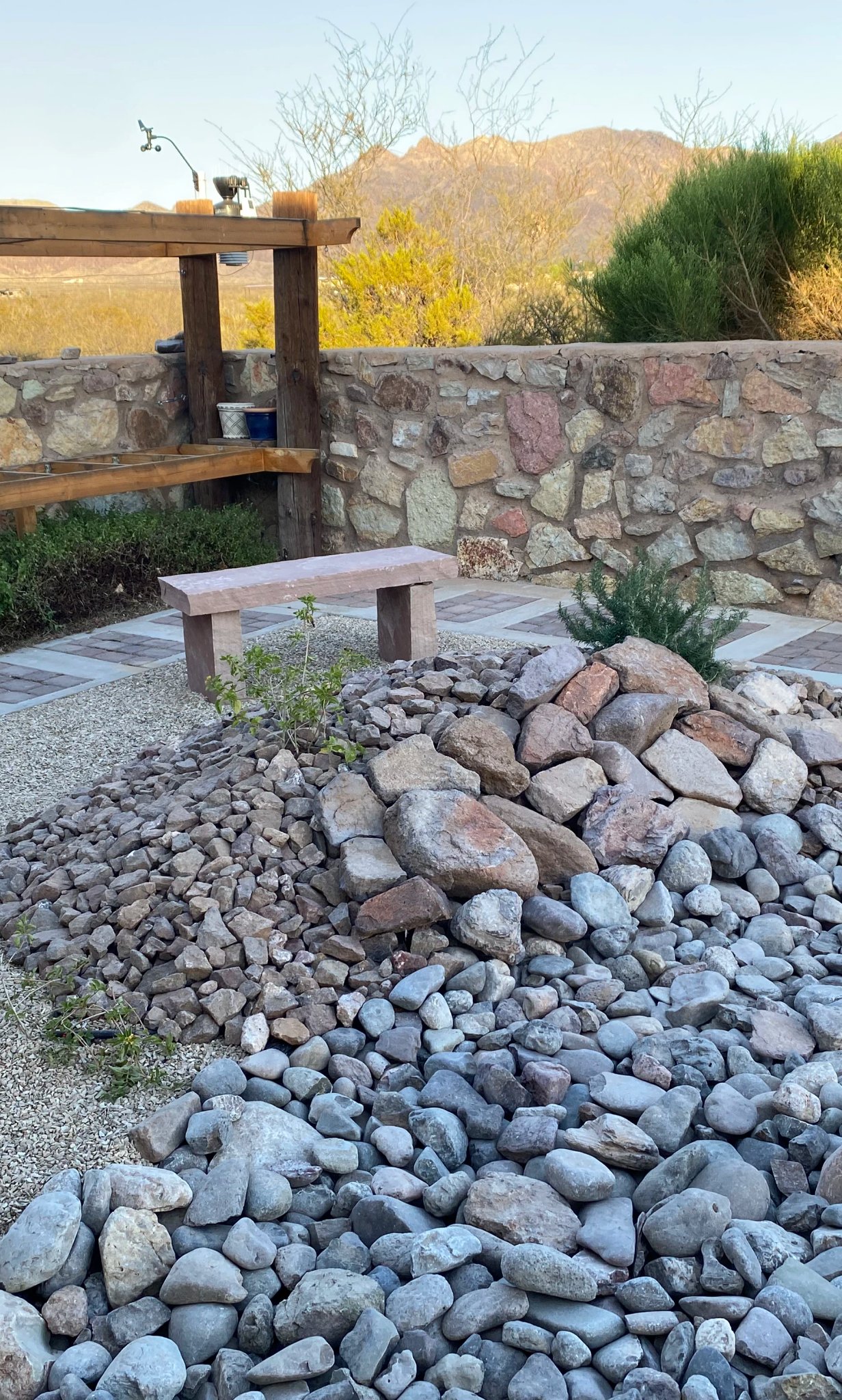
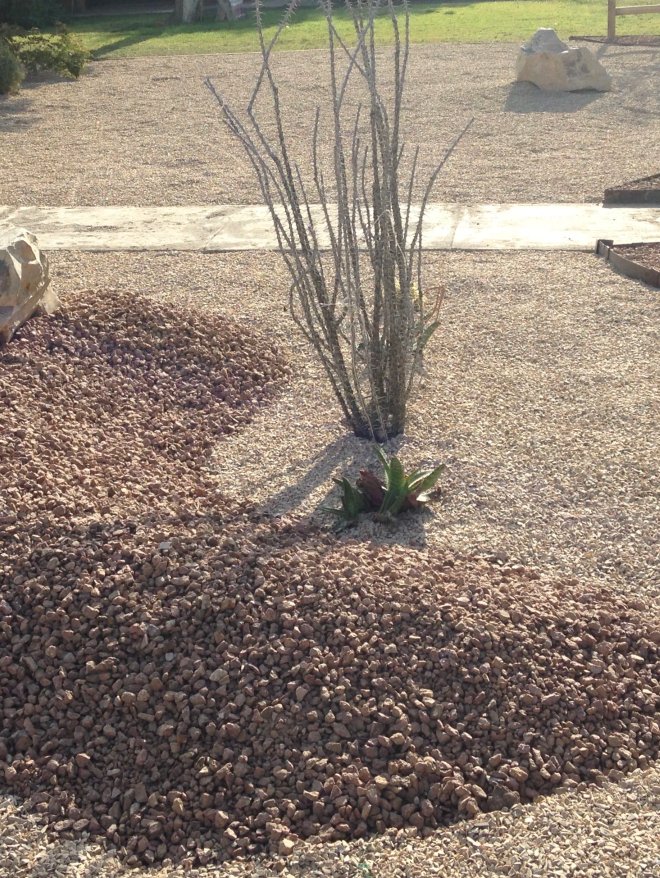
Brainard's Greenscapes stone border and slope erosion control in Las Cruces
Where It Works Best

Erosion Control Methods for Every Mesilla Valley Property

Erosion control is not one product. It is a layered system, and the right mix depends on slope, soil, and how water moves across the lot. Here is how we typically combine methods across Las Cruces and Mesilla Valley properties.

Hillside lots: tiered retaining walls or terraces to break a long slope into manageable steps, with vegetated swales between tiers. Common in Picacho Hills, Las Alturas, and Sonoma Ranch.

Arroyo-edge properties: riprap aprons and bank armoring at the cut, set on geotextile fabric so water passes through without lifting the rock. Native willows and grasses upslope to slow flow at the source.

Downspout splash zones: rock-lined channels or buried drain tile that carry roof runoff away from the foundation and release it slowly onto a vegetated swale.

Bare hillsides & xeriscape conversions: grading first, then a layer of fabric or jute, then deep-rooted natives like four-wing saltbush, Apache plume, and creeping mahonia. Rock mulch on top to hold everything in place until roots establish.

Driveways & pathways under runoff: regrading the approach, cutting a swale upslope to intercept water, and installing a riprap apron at the discharge point.

HOA-sensitive lots: erosion control that keeps soil and silt inside the property line, documented with before-and-after photos for HOA review.

Plan Your Erosion Control
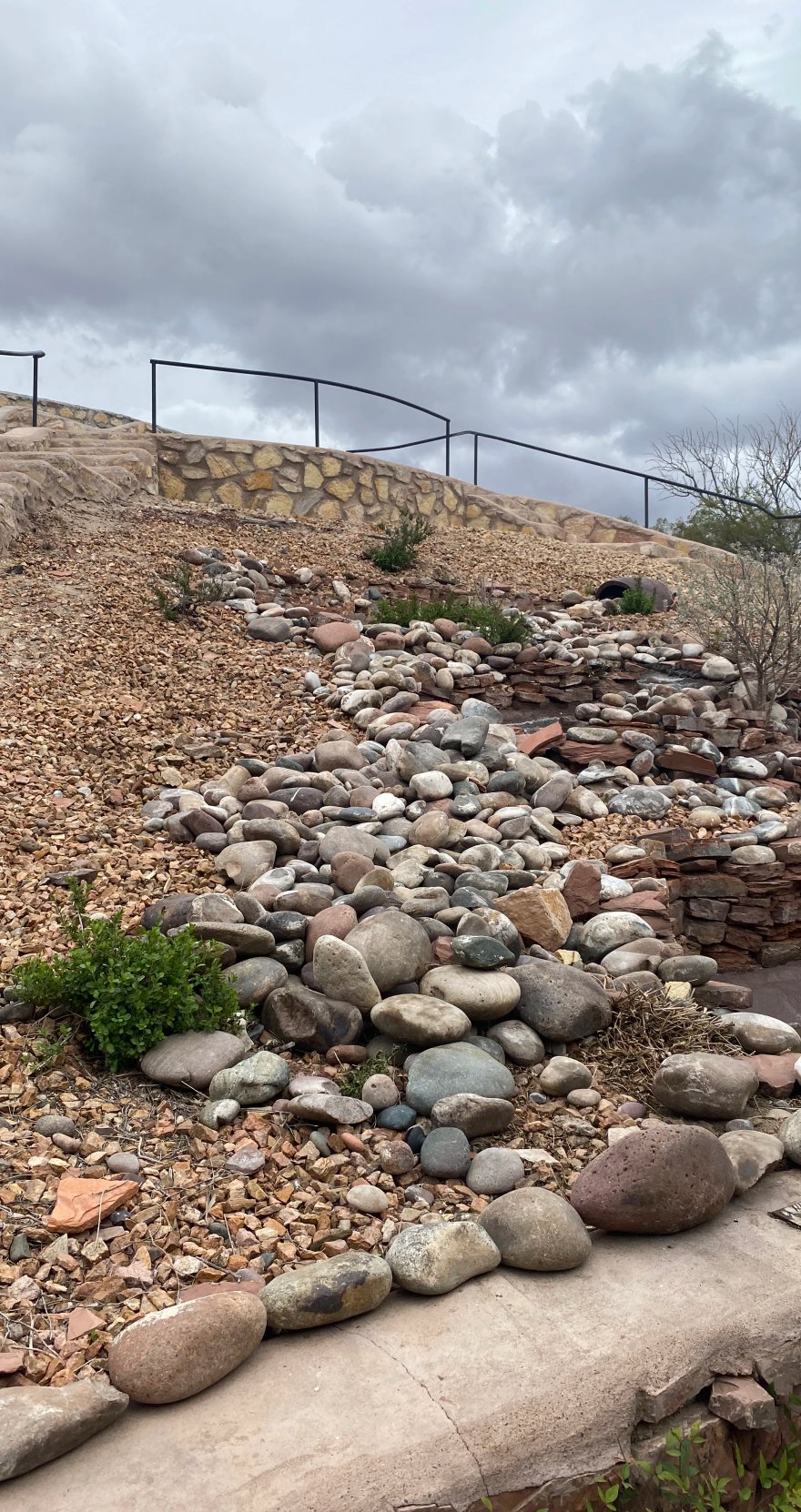
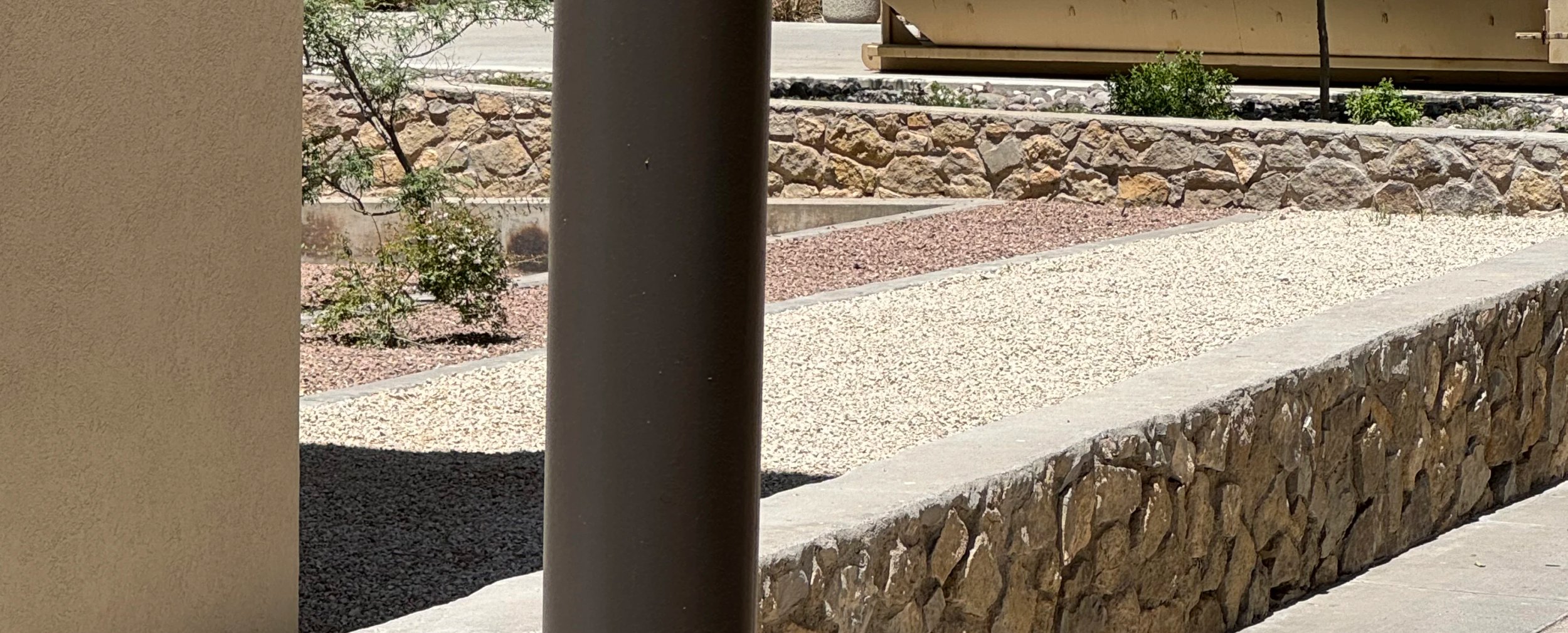
Dry-stack stone wall and slope erosion control by Brainard's Greenscapes in Las Cruces, NM
Why Choose Us

Why Las Cruces Trusts Brainard’s with Erosion Control

Erosion control is only as strong as the layer underneath. Skip the fabric, mis-size the rock, miss the drainage behind a wall, and the whole system fails the first monsoon. We spec real components, design for desert hydrology, and back the workmanship for as long as you own the home.

  • Designed for Desert Hydrology

    Las Cruces soil is caliche-heavy and does not soak fast. Every system is sized for short, intense monsoon bursts, not the gentle rain other regions design for.

  • In-House Crews

    Same company designs, builds, and stands behind the work. No subcontractors. Same number to call if a wall settles or a swale needs tuning next season.

  • Lifetime Workmanship Warranty

    Grading, wall construction, riprap, and fabric work backed for as long as you own the home. Plus full manufacturer warranties on wall block, geotextile, and drainage products.

  • Award-Winning Design

    Recognized for Excellence in Landscape Design in 2019 and 2022. Erosion control that holds the slope and looks like it belongs in the Chihuahuan Desert.

Get a Free Estimate
Manufacturer-Certified Installer

NDS Pro Certified Drainage Contractor

Erosion control is a drainage problem first. Brainard’s Greenscapes is an NDS Pro Certified contractor, trained directly by NDS (National Diversified Sales) — the largest drainage product manufacturer in the United States and the maker of the EZflow French-drain systems, Flo-Well dry wells, Spee-D channel drains, and pop-up emitters we use behind retaining walls, at downspout splash zones, and along arroyo edges.

What that means for you:
  • Full manufacturer warranty coverage on every NDS drain, basin, and emitter we install as part of an erosion-control system.
  • Trained directly by NDS on retaining-wall drainage, downspout dispersal, and channel-drain placement that keeps slopes intact.
  • Up-to-date on the latest drainage products and best practices the way NDS engineers actually design them.
  • Verifiable on the official NDS Pro contractor program — an independent, third-party trust signal.

Learn About NDS Pro Certification

Erosion Control Cost in Las Cruces

Typical Range $500–$10,000+

Erosion control cost depends on slope, soil, and methods used. Small repairs (one bare patch, a short swale, a downspout splash zone) typically run $500 to $2,500. Mid-size projects combining grading, riprap, fabric, and native planting usually land between $2,500 and $10,000. Larger slope stabilization with engineered retaining walls runs $10,000 and up. Every project starts with a free on-site assessment.

  • Free on-site assessment, always.
  • Itemized quote tied to the slope and scope. No ballparks.
  • Lifetime workmanship warranty on every install.
Request a Custom Quote

The Brainard’s Difference

  • Faith-Centered

    Honest pricing, clear communication, and follow-through on every job. We do what we say, on the schedule we promise.

  • Lifetime Workmanship Warranty

    Grading, walls, riprap, and fabric work guaranteed for as long as you own the home. Plus manufacturer warranties on every block and geotextile.

  • Locally Rooted

    In-house designers who know Mesilla Valley soil, arroyo patterns, and which native plants actually hold a slope through August.

Built for Our Climate

Erosion Control Designed for Las Cruces Monsoons

Our rain falls fast. The North American Monsoon brings most of the year’s precipitation between July and September in short, high-intensity bursts that overwhelm yards built for steady rain. Erosion control here has to absorb that punch.

  • Monsoon season: roughly June 15 to September 30. Plan slope work before late June so vegetation has a head start.
  • High-intensity rain bursts: an inch in twenty minutes is common. Systems are sized for the burst, not the season average.
  • Caliche subsoil: Mesilla Valley soil is calcium-carbonate-rich and does not absorb fast. Surface runoff is the rule, not the exception.
  • Arroyo proximity: properties near arroyos (Las Alturas, parts of Picacho Hills, East Mesa) get scoured banks during big flows. Bank armoring matters here.
  • HOA runoff rules: most Las Cruces HOAs require silt and rock to stay inside the property line. We document the work with photos you can share.
  • NMSU Extension resources: our planting palettes pull from NMSU’s Desert Blooms guidance for native, drought-tolerant species that anchor desert soil.
FAQ

Erosion Control FAQs

  • What is erosion control?

    Erosion control is the practice of protecting bare or sloped soil from being carried away by water and wind. On a Las Cruces property, that usually means a mix of grading, retaining walls, riprap, swales, geotextile fabric, and native plantings designed to handle our short, hard monsoon storms. The goal is to slow water down, spread it out, and hold soil in place so it stops washing onto driveways, sidewalks, and neighbors.

  • How much does erosion control cost in Las Cruces?

    Erosion control cost depends on slope, soil, and the method we use. Small fixes (one bare patch, a short swale, a few yards of riprap) typically run $800 to $2,500. Mid-size projects with vegetation, fabric, and rock work usually land between $2,500 and $10,000. Larger slope stabilization with engineered retaining walls runs $10,000 and up. Every project starts with a free on-site assessment and a written, itemized quote.

  • How do I control erosion on a slope?

    Slope erosion is almost always a water problem first. The fix is to slow runoff, then anchor the soil. We usually combine three layers: grading and swales to redirect water, a stabilizing layer (riprap, geotextile fabric, or a retaining wall depending on the grade), and deep-rooted native plants that lock the soil together over time. A steep slope often needs all three. A gentle slope may only need vegetation and a small swale.

  • What are the best erosion control methods for desert yards?

    In the Chihuahuan Desert, the methods that hold up to monsoon bursts are riprap (rock armoring along washes and downspouts), dry-stack or block retaining walls on steeper grades, vegetated swales that move water without scouring, geotextile fabric under rock, and native plant cover such as desert willow, four-wing saltbush, and creeping mahonia. Hydroseeding and straw blankets work in milder climates but rarely survive a Las Cruces summer alone.

  • Are retaining walls good for erosion control?

    Yes. A properly built retaining wall is one of the most reliable erosion control tools on a steep lot. The wall holds the soil back, and the drainage we build behind it (gravel, drain tile, weep holes) lets water exit without pressure building up. We build segmental block walls, dry-stack stone walls, and engineered walls depending on height and load. Anything over four feet in Las Cruces typically needs a permit and engineered drawings, which we coordinate.

  • What plants are best for erosion control in Las Cruces?

    Deep-rooted natives that can handle full sun and very little water are the best long-term anchors. We commonly use four-wing saltbush, Apache plume, desert willow, fernbush, creeping mahonia, and native grasses like blue grama and sideoats grama. On hillsides we add prostrate junipers for fast cover. Pairing rock and vegetation gives you immediate protection while the roots fill in over the first two seasons.

  • How long does an erosion control project take?

    Small repairs (one bare patch, a downspout splash zone, a short swale) are usually a one-day job. Mid-size projects combining grading, fabric, rock, and planting typically run two to four days. Larger slope stabilization with retaining walls runs one to three weeks, depending on wall height, permitting, and access. We schedule around the monsoon window when possible so the work is locked in before the next round of storms.

  • Can erosion control help with HOA runoff complaints?

    Yes. Most HOA notices in Las Cruces are about silt and rock washing onto sidewalks, streets, or a neighbor’s lot after a storm. We design erosion control that keeps water and soil inside your property line: re-routed downspouts, a swale at the property edge, a riprap apron at any concentrated flow point, and vegetation that holds soil between storms. We document the work with before and after photos you can share with your HOA.

Stop the Slope from Slipping Again.

Get a Free Estimate