The bed wall and the fill matter equally. Wood, stone, and metal each behave differently in the desert. Soil mix is what actually grows the plants. We size everything to your yard and what you want to grow, not a one-size kit.
Cedar: the kitchen-garden default. Naturally rot-resistant, no chemical treatment, lasts 10 to 15 years untreated. Good for vegetables, herbs, raised salad gardens. Available in 2x6, 2x8, 2x10, and 2x12 plank widths for any bed height.
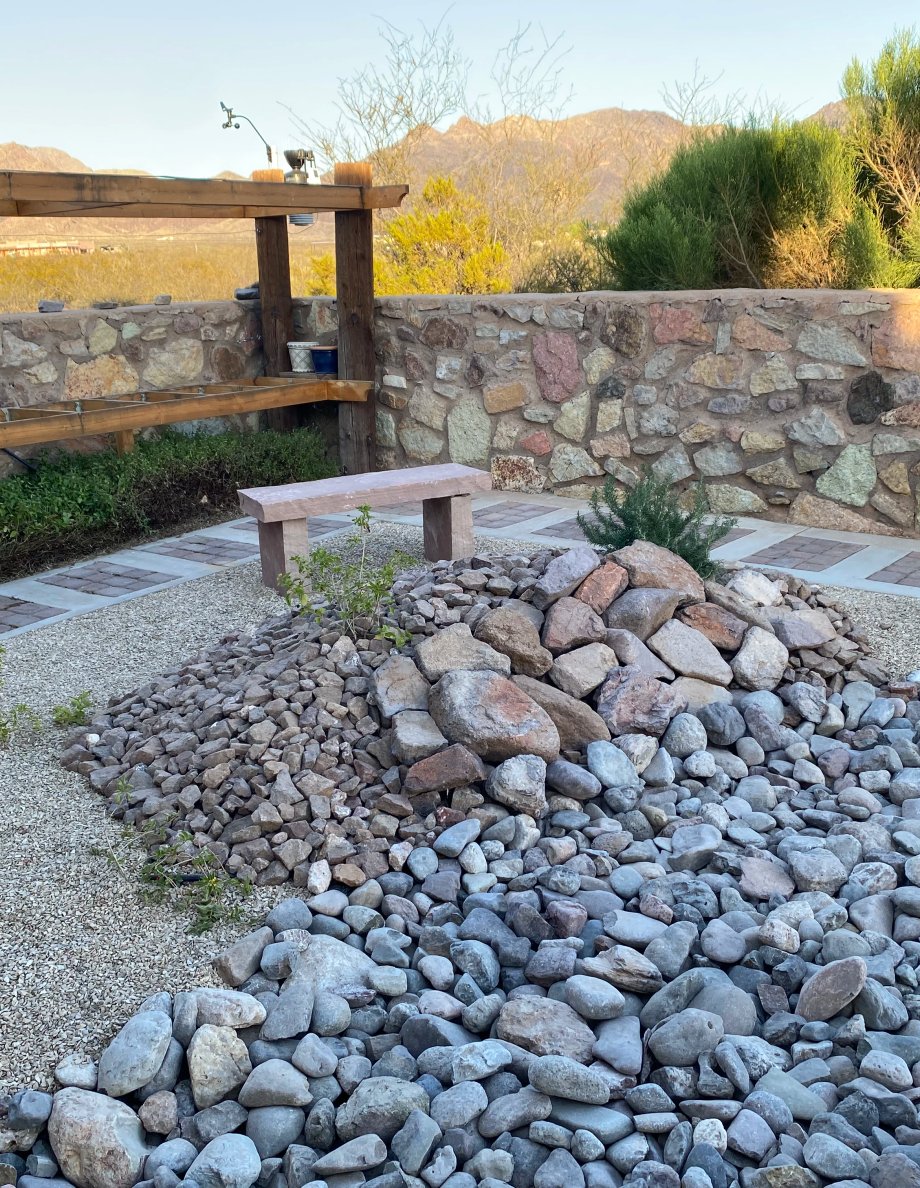
Stone: dry-stacked flagstone, mortared block, or local sandstone walls. 25+ year lifespan, looks built-in, holds heat (good for early spring, harder in mid-summer). Best for ornamental beds and hardscape-integrated kitchen gardens.
Corrugated galvanized metal: 20+ year lifespan, chemically inert, modern look, wraps a cedar frame. Heats up fast in summer sun, so we site it for morning sun and afternoon shade or pair it with light-colored mulch on top.
Pressure-treated lumber: budget-friendly, 15+ year lifespan. Modern (post-2003) treatments are EPA-approved for residential garden contact, but most clients still default to cedar for vegetable beds.
Soil mix (Chihuahuan Desert blend): roughly 50% topsoil, 30% finished compost, 15% coarse sand or perlite, 5% earthworm castings or aged manure. Optional gypsum if the underlying ground is heavy clay or caliche. We avoid pure peat-based mixes, which dry out fast in 100°F heat.
Bed depths: 12 inches for greens and herbs, 18 inches for tomatoes and most vegetables, 24 inches when the bed sits on caliche or hardscape with no native soil contact below.
Pick Your Materials





 Garden Above the Caliche.